Article · July 28, 2026
Online Pilates for Teenagers: Build Strength, Fix Posture & Stay Fit at Home
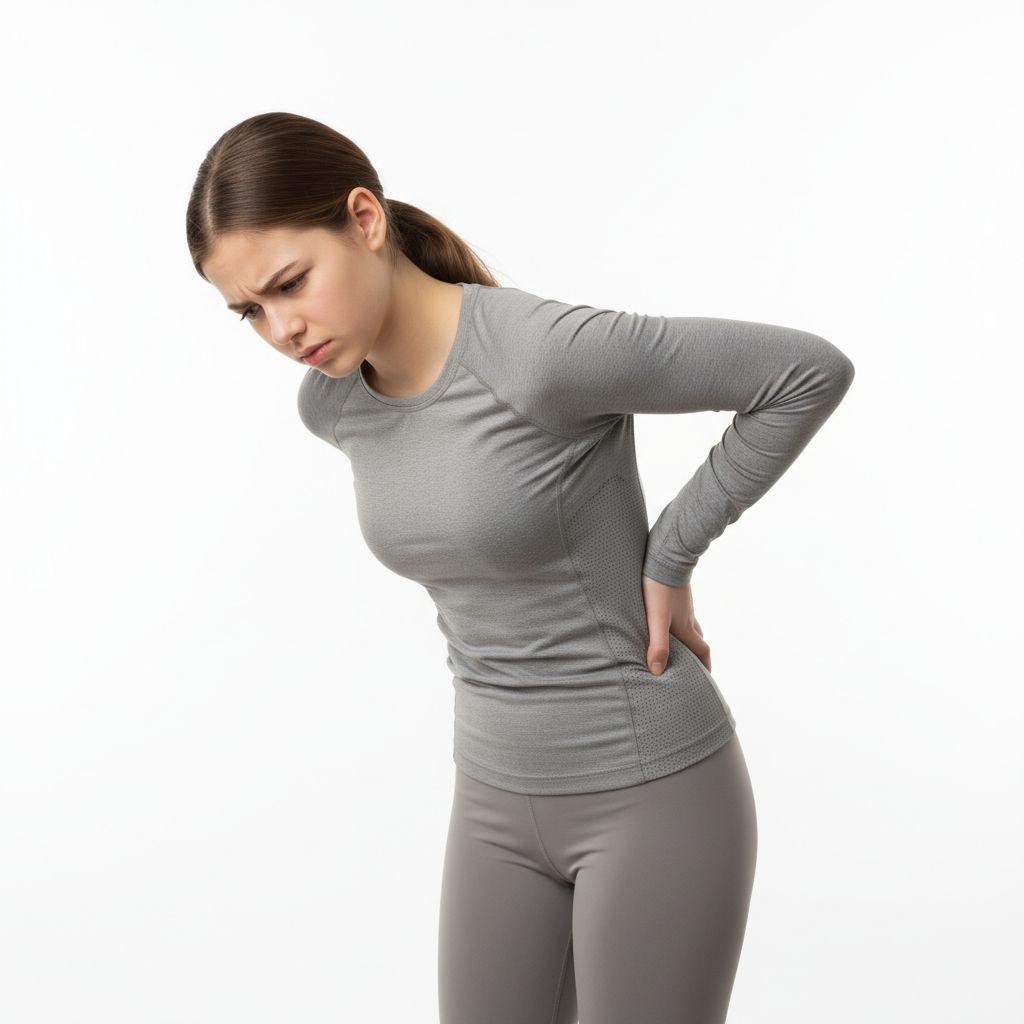
Online Pilates for Teenagers: A Complete Guide to Safe, Effective Home Workouts
Teenagers today face a set of fitness challenges that previous generations simply didn't: hours hunched over screens, desk posture that compounds through long school days, and a growing desire for movement that doesn't come with the pressure of competition or crowded gyms. Online Pilates for teenagers has quietly become one of the most practical answers to all three.
Unlike high-intensity trends or team sports, Pilates meets teens where they are — building real core strength, correcting the forward-head slouch that smartphones accelerate, and developing body awareness that carries into every sport and activity they already love. It's low-impact enough for growing bodies, challenging enough to keep motivated teens engaged, and flexible enough to fit around packed school schedules.
Whether your teenager is a competitive athlete looking for an edge, a student struggling with back pain, or simply someone who wants to feel stronger at home, this guide covers everything you need to know to get started safely and effectively.
Key Takeaways
- Two to three Pilates sessions per week is enough for teens to notice real posture improvements and core strength gains within 4–8 weeks of consistent practice.
- Online Pilates addresses the specific postural problems most adolescents develop — forward head posture, rounded shoulders, and lower-back strain — by strengthening deep stabilizing muscles rather than just stretching.
- Virtual classes remove the social pressure and comparison trap of group gym environments, making Pilates a genuinely welcoming fitness option for teens who don't thrive in competitive settings.
- Pilates complements team sports and athletic training by filling gaps in mobility, core stability, and injury prevention that sport-specific training often leaves behind, rather than replacing primary training.
- Teens need almost no equipment to start — just a mat, floor space, and internet connection — which eliminates common barriers to beginning a consistent practice.
- Mindful movement in Pilates activates the nervous system's rest-and-digest response through focused breathing and deliberate movement, directly reducing stress and improving emotional regulation in adolescents.
Why Online Pilates for Teenagers Actually Works
Pilates isn't just stretching. For teenagers navigating packed school schedules, competitive sports, and hours hunched over screens, it's one of the most practical fitness tools available — and online Pilates for teenagers makes it accessible without a commute or a crowded studio.
Here's what this guide covers, and what teens and parents can expect:
- Online Pilates is low-impact and safe for developing bodies, including those still in growth phases, when age-appropriate modifications are used.
- Consistency matters more than intensity. Two to four sessions per week is enough for beginners to notice real changes in posture and strength.
- Teen posture correction through Pilates addresses the specific patterns most adolescents develop — forward head posture, rounded shoulders, that familiar dull ache between the shoulder blades after a long day of classes.
The benefits go beyond the physical. Teen Pilates workouts build body awareness and mental focus, which research consistently links to lower stress and better emotional regulation in adolescents.
- Pilates for teen athletes isn't a replacement for primary training — it's a powerful complement, reducing injury risk and sharpening coordination.
- Strength training for teenagers doesn't have to mean heavy weights. Pilates builds functional core and stabiliser strength using bodyweight and controlled movement, making it an excellent starting point for younger teens.
- Virtual Pilates classes for teens remove the social pressure of group gym environments, making it a genuinely welcoming option for teens who aren't drawn to competitive fitness.
No expensive equipment is required. A mat, enough floor space to lie flat, and a reliable internet connection are enough to get started — and honestly, that low barrier is a big part of why teens actually stick with it.
Why Pilates Is Perfect for Teenage Fitness
There's a reason Pilates has quietly become one of the most recommended movement practices for young people — and it has nothing to do with trends. It comes down to how well the method fits a teenage body and a teenage life.
Unlike many fitness options that demand peak performance from day one, Pilates meets teens exactly where they are. The low-impact nature of a teen Pilates workout means developing joints, growing bones, and still-maturing connective tissue aren't put under unnecessary stress. Every movement is controlled, intentional, and scalable — and that matters enormously during adolescence, when bodies are changing faster than most teens can keep up with.
There's also the environment. Walk into a competitive gym or a high-pressure team sport setting, and some teenagers thrive — but many don't. Pilates offers something different: a non-competitive space where the only measure of progress is your own body. For teens who find traditional fitness intimidating, virtual Pilates classes offer that same calm, focused energy from home.
Benefits of Pilates During Teen Years
The physical benefits of Pilates for teenagers are both immediate and long-lasting. Core strength is the most obvious gain — not the kind that comes from endless crunches, but deep, functional stability that supports everything from sitting at a desk to sprinting on a field. That quiet engagement of deep abdominal muscles, the slight warmth spreading through the low back as the spine lengthens — that's real strength being built.
Flexibility improves steadily too, as does coordination. Teens often experience rapid height changes that temporarily disrupt their natural movement patterns, leaving them feeling clumsy or uncoordinated. Pilates directly addresses this by reinforcing body awareness and motor control, helping teens re-establish fluid, confident movement.
Strength training for teenagers through Pilates also builds balanced muscle development. Rather than isolating single muscle groups, exercises work the body as an interconnected system. This reduces compensation patterns that lead to injury down the line and supports better performance in whatever else a teen is doing physically.
Mental Health and Emotional Benefits
Teenagers carry more stress than most adults give them credit for. Academic pressure, social dynamics, screen fatigue — it accumulates. What makes Pilates particularly effective for mental wellbeing isn't just that it's calming, though it is. It's that it demands just enough focus to pull attention away from everything else.
Each exercise requires conscious breathing and deliberate movement. That combination — breath plus body — activates the nervous system's rest-and-digest response. Research consistently links mindful movement practices to reduced cortisol levels and improved mood, and Pilates fits squarely within that category.
The confidence gains are less talked about but equally real. When a teen realizes they can control their body with precision — that they can feel the difference between a sloppy movement and a clean one — something shifts. It's a quiet kind of confidence, built from the inside out, not from how they look in a mirror. For teens navigating body image challenges, that distinction matters a lot.
Online Pilates for teenagers also removes the performance-comparison trap that can make group fitness feel discouraging, giving teens the freedom to focus entirely on themselves.
How Pilates Complements Other Teen Activities
Pilates was never designed to be someone's only physical activity — and for most teenagers, it won't be. That's exactly what makes it so versatile.
For Pilates for teen athletes, the method acts as a performance foundation. A soccer player develops better hip stability. A swimmer gains shoulder control and breathing efficiency. A dancer refines balance and spatial awareness. Pilates fills the gaps that sport-specific training often leaves open.
Beyond athletics, Pilates pairs naturally with any active lifestyle. Teens who run, cycle, or simply want to move more freely find that regular Pilates sessions reduce everyday aches and improve how their body handles physical demand. Two sessions a week alongside existing activities is enough to feel the difference — and it never competes with what a teen is already doing. It supports it.
Posture Correction: The Number One Teen Pilates Benefit
Ask any teenager what their body feels like after a full school day, and the answer is usually some version of "stiff" or "sore." That dull ache between the shoulder blades, the heaviness in the lower back — these aren't just discomfort. They're early warning signs of postural habits that, left unchecked, can become deeply ingrained.
Common Posture Problems in Today's Teens
The average teenager spends hours each day in the same position: head tilted forward, shoulders curving inward, lower back flattened against a chair. Multiply that across years of school desks, homework, and phone scrolling, and you get a predictable cluster of postural problems.
Forward head posture is perhaps the most common. For every inch the head drifts forward of the shoulders, the effective load on the cervical spine increases significantly — which explains why so many teens complain of neck tension and headaches. Rounded shoulders follow closely behind, caused by tight chest muscles pulling the upper body inward while the mid-back muscles grow weak from disuse. Lower-back strain rounds out the picture, often the result of hip flexors shortened from prolonged sitting.
Here's the thing — these aren't cosmetic issues. They affect breathing, concentration, and athletic performance.
How Pilates Fixes Postural Issues
Teen posture correction through Pilates works on two levels simultaneously: lengthening what has tightened and strengthening what has switched off. This is where Pilates separates itself from simply "standing up straight."
Core activation is central to everything. Pilates teaches teenagers to engage the deep stabilising muscles — the ones you can't see in a mirror but feel working when you move with control. With a stronger, more responsive core, the spine finds its natural alignment rather than collapsing into habitual patterns.
Equally important is the correction of muscle imbalances. Exercises targeting the mid and upper back — chest lifts, spine extension work, shoulder blade mobilisation — directly counter the rounded-forward position that screen time creates. The focus isn't on isolated muscle groups but on how the entire body organises itself through space.
Virtual Pilates classes for teens are particularly effective here because teens can pause, rewatch, and self-correct in real time using a mirror at home.
Timeline: How Long to See Posture Improvements
Realistic expectations matter. Many teens doing a consistent teen Pilates workout two to three times per week report something subtle but meaningful within the first two to four weeks: they start noticing their posture. That awareness — catching yourself slouching and knowing how to adjust — is itself a genuine result.
Visible, sustained postural changes typically emerge between six and eight weeks of regular practice. The back feels more open. Sitting through a class period becomes less exhausting. The chronic tension between the shoulder blades begins to ease.
Progress isn't linear, and it depends heavily on consistency rather than intensity. Three focused, mindful sessions per week will outperform daily rushed ones. The goal isn't perfection — it's building new defaults, so good alignment stops requiring constant effort and simply becomes the way the body moves.
Online Pilates for Teen Athletes: Injury Prevention and Performance
Teen athletes push hard. Between practice schedules, weekend games, and the physical demands of a growing body, the risk of injury is real — and often underestimated. Online Pilates for teenagers offers something most sports training programs overlook: deliberate, focused movement that builds the stabilizing muscles before they're needed most.
Pilates for Common Teen Sports Injuries
Most teen sports injuries don't happen because of bad luck. They happen because of muscle imbalances, poor joint stability, and movement patterns that nobody ever corrected.
Ankle sprains, for example, are often rooted in weak peroneals and limited proprioception — the body's ability to sense its own position in space. Pilates exercises like single-leg standing work and controlled footwork directly strengthen those stabilizing muscles. Knee issues, particularly common in teenage runners and soccer players, frequently trace back to weak glutes and tight hip flexors. A consistent teen Pilates workout addresses both.
Rounded shoulder problems — so common in swimmers and tennis players — respond well to the scapular stabilization work woven throughout mat-based Pilates sequences. Lower-back strain is perhaps the most widespread complaint among young athletes, and Pilates builds the deep spinal stabilizers that actually hold up under load, not just the superficial muscles that look strong but fail when it counts.
Building Balance and Coordination
Imagine standing on one leg mid-movement and feeling your foot, ankle, and hip quietly negotiate with each other to stay steady. That's proprioception at work — and Pilates trains it systematically. We see this all the time: teen athletes who start Pilates because their coach suggested it, then stay because their agility genuinely improves. Through slow, controlled exercises that demand full attention, teen athletes develop a sharper internal map of how their body moves, which translates directly to better reaction time and cleaner technique across virtually every sport.
Pilates as Cross-Training for Teen Athletes
Pilates for teen athletes is not a replacement for sport-specific training. It's a complement. Two sessions of virtual Pilates classes per week alongside regular practice gives athletes a recovery-friendly workout that reinforces movement quality without adding high-impact stress to already-taxed joints. Strength training for teenagers matters — but so does the neuromuscular control that makes that strength usable.
Safe Pilates Practice for Developing Teen Bodies
Parents often have a simple question before their teenager starts anything new: is this actually safe? It's a fair one. With Pilates, the honest answer is yes — with the right approach.
Is Online Pilates Safe for Teenagers?
Mat-based Pilates is widely considered one of the safest movement practices for adolescents. The emphasis on controlled, low-impact movement means joints aren't loaded the way they are in heavy lifting or high-impact sports. That said, teenagers aren't just small adults. Growing bodies come with specific considerations — particularly around the cartilage-rich growth plates near the ends of long bones, which are more vulnerable to strain during adolescence than in adulthood.
The good news is that classical Pilates principles — neutral spine, controlled range of motion, no ballistic or jerky movements — naturally protect these areas. The risk isn't really in the method itself. It's in pushing too hard, too fast, without proper instruction. This is why age-appropriate modifications matter so much, and why choosing a quality online Pilates resource with clear, illustrated cues makes a meaningful difference for teens practicing at home without a teacher physically present.
One sign a teen is working safely: you should hear steady, rhythmic breathing throughout the session — not held breath or strained exhales. If the breath disappears, the effort is likely too high.
For teens with pre-existing conditions — scoliosis, hypermobility, recent injuries — a brief conversation with a physiotherapist or GP before starting is always worth the time.
Key Modifications for Different Teen Age Groups
Developmental stage matters more than age alone, but age ranges offer a useful starting framework.
Ages 13–15 are often still in active growth phases, sometimes experiencing the awkwardness of a body that feels unfamiliar — limbs that grew faster than the nervous system had time to map. At this stage, the priority is building body awareness and movement vocabulary rather than intensity or load.
Focus for this group:
- Fundamental mat exercises that teach spinal articulation, hip hinging, and shoulder stability
- Shorter sessions (20–30 minutes) to maintain focus and avoid fatigue-driven compensations
- Emphasis on feeling the movement, not just completing the repetition
Ages 16–19 generally have greater neuromuscular maturity and can handle progressions with more confidence. Core stability work can be more challenging, sequences can lengthen to 40–45 minutes, and exercises requiring single-leg balance or rotational control become appropriate goals. This age group also responds well to understanding why an exercise works — connecting the movement to a sport they play or a postural habit they want to change.
Across both groups, one principle holds: skip the ego. Pilates rewards precision over power. A clean, controlled single-leg stretch is worth far more than a sloppy advanced variation.
What Equipment Do Teens Need at Home?
Very little, honestly. That's part of what makes online Pilates for teenagers such a practical option.
A good quality mat is the single most important piece of equipment — thick enough to cushion the spine during rolling exercises (around 6–8mm is a reasonable target), with enough grip to prevent sliding during standing or plank-based work. The feeling of a stable mat beneath the feet during a single-leg balance is subtle but genuinely supportive.
Beyond that, occasional props can add variety and challenge:
- A small, squishy Pilates ball for inner-thigh activation and abdominal work
- A resistance loop or light band for hip and shoulder stability exercises
That's it. No reformer required. Reformer Pilates — the machine-based version common in studios — is excellent, but it's an added expense and not necessary for an effective, progressive teen Pilates workout at home. Space-wise, teens need roughly the length of their mat plus an arm's reach in all directions. A cleared bedroom floor works perfectly.
Getting Started: Frequency, Duration and Expectations
Starting anything new feels overwhelming. The good news is that online Pilates for teenagers has a genuinely low barrier to entry — no gym membership, no coach, not much space required.
How Often Should Teens Do Pilates?
Two to three sessions per week is the sweet spot for beginners. That frequency gives developing muscles enough stimulus to adapt while leaving room for recovery — something teen bodies genuinely need, especially during growth spurts when tissues are under extra stress. Each session can run anywhere from 20 to 45 minutes depending on energy levels and the day's demands.
After four to six consistent weeks, many teens naturally want to add a fourth session. That's a healthy sign of progress. Resist the urge to jump to daily practice too soon, though — rest days aren't wasted days. They're when the real adaptation happens. On lighter days, even ten minutes of mindful breathing and gentle spinal mobility counts as active recovery.
How Long Until Teens See Results?
Consistency matters more than intensity here. Most teens doing virtual Pilates classes two to three times per week notice improved body awareness within the first two to three weeks — that quiet sense of where your body is in space, the feeling of your shoulders dropping away from your ears without being told.
Posture changes become visible to others around the six to eight week mark. Strength gains in the deep core and stabilising muscles typically follow a similar timeline, though these feel different from gym-style strength — more like control than power. And honestly, that feeling of being in control of your own body is something teens often say they didn't expect.
Best Age to Start Pilates for Teenagers
There's no minimum age that disqualifies a young person. In practice, most teens from around 12 or 13 onward have the body awareness and attention span to engage meaningfully with Pilates principles. Younger beginners benefit most from shorter sessions and simpler exercises focused on breath and basic alignment rather than strength challenges. As teens move into their later adolescent years, the full range of Pilates classes for teenagers — including more demanding core work and balance training — becomes entirely appropriate with good instruction guiding the way.
Pilates vs. Other Teen Fitness Options
Choosing the right fitness path as a teenager can feel overwhelming. Gym memberships, team tryouts, YouTube workouts — the options are endless, and not every format suits every personality or body. Here's how Pilates honestly stacks up against the most common alternatives.
Pilates vs. Traditional Gym Workouts
Walk into most commercial gyms and you'll hear the clank of heavy weights, machines humming, and music turned up loud. It's an environment that suits some teens — but not all.
Traditional strength training for teenagers can be genuinely beneficial, especially for older teens with proper coaching. The concern isn't weightlifting itself; it's unsupervised loading on still-developing joints and spines. Pilates sidesteps this risk entirely. The resistance comes from bodyweight, springs, or resistance bands rather than heavy plates, which means teens build real functional strength without the compression forces that heavy lifting places on growing bones.
The other meaningful difference is form. Pilates is built entirely around precision and controlled movement — there's no momentum, no grinding through reps. That focus on technique transfers directly to better movement patterns in everyday life, something a generic gym circuit rarely prioritises. For teens specifically interested in teen posture correction, Pilates consistently outperforms machine-based gym work because it trains the deep stabilising muscles that machines tend to bypass.
Pilates vs. Team Sports
Team sports offer something Pilates doesn't: community, competition, and the electric feeling of playing alongside teammates. Those are real, irreplaceable benefits.
But team sports also come with scheduling constraints, tryout pressure, and injury rates that Pilates simply doesn't carry. Not every teenager thrives in competitive environments — and for those who don't, online Pilates for teenagers provides a genuine, pressure-free alternative that still builds coordination, body awareness, and cardiovascular fitness.
For teen athletes already playing sports, Pilates functions best as a complement rather than a replacement. The two approaches reinforce each other — Pilates fills the gaps in mobility, core stability, and injury prevention that sport-specific training leaves behind.
Frequently Asked Questions About Online Pilates for Teens
Is online Pilates safe for teenagers?
Yes — when exercises are age-appropriate and performed with proper guidance, online Pilates is one of the safest fitness options available for developing bodies. The key is choosing instruction that offers clear modifications and doesn't push teens into advanced movements before they're ready.
What's the best age to start Pilates?
Most teens can begin as early as 13 with a beginner-focused program. Younger adolescents benefit most from mat-based work that emphasizes body awareness over intensity. By 16–19, teens can gradually explore more challenging progressions as their bodies mature.
How often should teenagers do Pilates?
Two to three sessions per week is a solid starting point. That rhythm gives developing muscles time to recover while still building consistency. As strength and body awareness improve, some teens naturally drift toward four sessions weekly without feeling overworked.
How long before teenagers see results from Pilates?
Posture awareness often shifts within the first two to three weeks — that quiet moment when a teen catches themselves sitting taller without thinking about it is usually the first sign something is working. Visible strength changes and meaningful posture correction typically follow around the six-to-eight-week mark with regular practice.
What equipment do teens need for a teen Pilates workout at home?
Almost none. A non-slip mat is the only true essential. A small cushion or folded blanket helps with comfort during certain exercises. Reformer equipment is never necessary for beginners, and most effective mat Pilates programs require nothing more than floor space and focus.
Can Pilates actually fix teen posture?
Pilates for teen posture correction works by strengthening the deep core and back muscles that hold the spine upright — not just stretching tight areas. It addresses the root cause of slouching rather than temporarily correcting it. Combined with consistency, it produces lasting change that carries into daily life, sport, and everything in between.
Conclusion and Next Steps
Pilates works. Not in a flashy, overnight-transformation kind of way — but in the quiet, cumulative way that actually sticks. For teenagers navigating crowded schedules, screen-heavy days, and developing bodies, that consistency matters more than intensity ever could.
Throughout this guide, we've covered a lot of ground. Online Pilates for teenagers offers something genuinely rare: a form of movement that builds real core strength, addresses the rounded-shoulder, forward-head posture that comes from hours at a desk, and supports teen athletes without adding strain to already-busy training loads. It's accessible from early adolescence, requires almost no equipment, and fits into a bedroom, living room, or wherever there's enough floor space to roll out a mat.
The mental side is just as real as the physical. That steady, grounding sensation after 20 minutes of intentional movement — muscles warm, breath slower, mind quieter — is something no notification or highlight reel can replicate. For teens navigating stress, social pressure, and constant comparison, that inner steadiness is its own kind of strength.
Starting doesn't need to be complicated. Two to three sessions a week, a mat, and a commitment to showing up consistently is genuinely enough to begin seeing changes. Posture improves. Coordination sharpens. Over time, Pilates builds a physical foundation that carries into every sport, activity, and stage of life ahead. One 16-year-old we know started purely because her back ached after school — within two months she was doing Pilates before swim practice because she said it made her feel more ready to move. That's the kind of shift that's hard to quantify but impossible to ignore.
Whether your teen is a competitive athlete looking for smarter cross-training, a student whose back aches after a long day of studying, or simply someone who wants a non-competitive, judgment-free workout — Pilates fits. If you'd like a structured place to begin, the 99 Pilates Exercises manual from Elia Move covers a wide range of illustrated, clearly explained exercises suited to different levels, so teens and parents can follow along with confidence from day one.
Frequently Asked Questions
Is online Pilates safe for teenagers?
Yes, online Pilates is safe for teenagers when they follow proper form and choose age-appropriate classes. The key is starting with beginner or teen-specific programs that focus on controlled movements rather than high intensity, and pausing if anything causes sharp pain. Many teens find online classes actually safer than in-person workouts because they can replay form cues and progress at their own pace without peer pressure to go harder.
How often should a teenager do Pilates per week?
Most teenagers benefit from two to four Pilates sessions per week, with at least one rest day between sessions to allow muscles to recover. If a teen is also doing other sports or strength training, two to three sessions weekly is a solid balance that won't lead to overtraining. Even just 20–30 minutes per session is effective — consistency matters more than duration.
What are the main benefits of Pilates for teen athletes?
Pilates builds the deep core stability that improves performance in virtually any sport — from soccer to swimming to dance — while reducing injury risk by strengthening stabilizer muscles. It also enhances body awareness and control, which translates to better technique in their primary sport. Many teen athletes use Pilates as active recovery or cross-training to stay strong without the impact of their main activity.
Can Pilates help fix teenage posture problems?
Absolutely — Pilates is one of the most effective tools for correcting poor posture because it strengthens the exact muscles (deep core, back extensors, shoulder stabilizers) that support an upright spine. Most teens notice visible posture improvements within four to six weeks of consistent practice, especially those spending hours at desks or hunched over screens. The body awareness Pilates builds also makes teens more conscious of their posture throughout the day.
Do teenagers need special equipment to do Pilates at home?
No — many effective Pilates workouts require nothing but a mat and bodyweight, making it perfect for home practice. Optional items like resistance bands, a small foam roller, or a Pilates ring can add variety and challenge as teens progress, but they're not necessary to start. Online classes designed for teens often specify what's needed, so your teen can choose programs that match what they have available.
What is the best age to start Pilates for teenagers?
Teenagers can safely start Pilates from around 13 onward, though some younger teens benefit from beginner classes that focus on foundational movement patterns. There's no such thing as too late to start either — even 17- or 18-year-olds new to Pilates see meaningful improvements in strength and mobility. The best age to start is whenever a teen is interested and motivated, because consistency is what creates real results.
How long does it take to see results from Pilates for teens?
Most teenagers notice improved body awareness and feel stronger core engagement within two to three weeks of regular practice. Visible postural changes and noticeable strength gains typically appear within four to eight weeks, depending on starting fitness level and consistency. Long-term benefits like significantly improved athletic performance or major posture transformation usually develop over two to three months or more — but the mental clarity and confidence boost often come even sooner.
Frequently Asked Questions
- Is online Pilates safe for teenagers?
- Yes, online Pilates is safe for teenagers when they follow proper form and choose age-appropriate classes. The key is starting with beginner or teen-specific programs that focus on controlled movements rather than high intensity, and pausing if anything causes sharp pain. Many teens find online classes actually safer than in-person workouts because they can replay form cues and progress at their own pace without peer pressure to go harder.
- How often should a teenager do Pilates per week?
- Most teenagers benefit from 2-4 Pilates sessions per week, with at least one rest day between sessions to allow muscles to recover. If a teen is also doing other sports or strength training, 2-3 sessions weekly is a solid balance that won't lead to overtraining. Even just 20-30 minutes per session is effective—consistency matters more than duration.
- What are the main benefits of Pilates for teen athletes?
- Pilates builds the deep core stability that improves performance in virtually any sport, from soccer to swimming to dance, while reducing injury risk by strengthening stabilizer muscles. It also enhances body awareness and control, which translates to better technique in their primary sport. Many teen athletes use Pilates as active recovery or cross-training to stay strong without the impact of their main activity.
- Can Pilates help fix teenage posture problems?
- Absolutely—Pilates is actually one of the most effective tools for correcting poor posture because it strengthens the exact muscles (deep core, back extensors, shoulder stabilizers) that support an upright spine. Most teens notice visible posture improvements within 4-6 weeks of consistent practice, especially those spending hours at desks or hunched over screens. The mind-body awareness Pilates builds also makes teens more conscious of their posture throughout the day.
- Do teenagers need special equipment to do Pilates at home?
- No—many effective Pilates workouts require nothing but a mat and body weight, making it perfect for home practice. Optional items like resistance bands, a small foam roller, or a Pilates ring can add variety and challenge as teens progress, but they're not necessary to start. Online classes designed for teens often specify what's needed, so your teen can choose programs that match what they have available.
- What is the best age to start Pilates for teenagers?
- Teenagers can safely start Pilates at any age from 13 onward, though some younger teens benefit from beginner classes that focus on foundational movement patterns. There's no "too late" to start either—even 17- or 18-year-olds new to Pilates see rapid improvements in strength and mobility. The best age to start is whenever a teen is interested and motivated, since consistency is what creates real results.
- How long does it take to see results from Pilates for teens?
- Most teenagers notice improved body awareness and feel stronger core engagement within 2-3 weeks of regular practice. Visible postural changes and noticeable strength gains typically appear within 4-8 weeks, depending on starting fitness level and consistency. Long-term benefits like significantly improved athletic performance or major posture transformation usually develop over 2-3 months or more, but the mental clarity and confidence boost often come even sooner.