Article · July 27, 2026
Online Pilates for Runners with Knee Pain: Evidence-Based Exercises to Prevent and Heal Runner's Knee
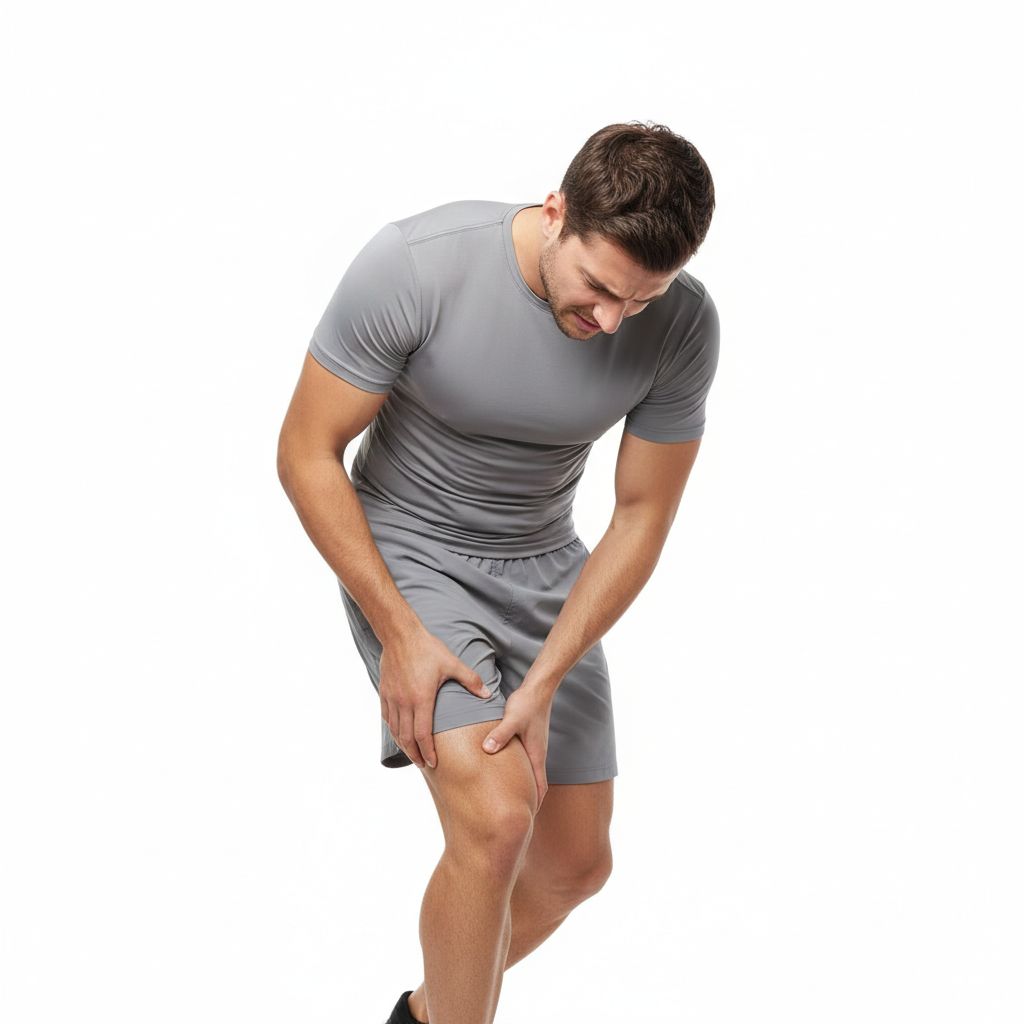
Online Pilates for Runners with Knee Pain: A Complete Guide to Prevention and Recovery
Runner's knee is one of the most common injuries sidelining distance runners — but the frustrating truth is that the problem rarely starts at the knee. If you've been searching for online Pilates for runners with knee pain, you're already thinking in the right direction. The real culprits are usually upstream: weak glutes, an unstable core, and poorly coordinated hip stabilizers that force your knee to absorb punishment it was never designed to handle alone.
Pilates targets these exact biomechanical imbalances. Rather than chasing the symptom, it addresses the dysfunction driving it — rebuilding the strength and control that running quietly erodes over time.
Whether you're managing patellofemoral pain syndrome, recovering from a flare-up, or trying to prevent your next one, this guide breaks down the exercises, progressions, and scheduling strategies that actually work — so you can get back to running stronger, not just pain-free.
Key Takeaways
- Runner's knee almost always originates from upstream biomechanical dysfunction — weak glutes, unstable core, or poor hip stability — rather than from the knee joint itself, making targeted Pilates work the appropriate treatment approach.
- Weak gluteus medius and maximus muscles allow the femur to drift inward during running (valgus collapse), creating uneven compression across the patellofemoral joint that accumulates damage over thousands of foot strikes.
- A structured 4-to-6-week Pilates progression starting with foundational glute activation (weeks 1–2), advancing to load tolerance (weeks 3–4), then integrating sport-specific movements (weeks 5–6+) prevents re-injury more effectively than jumping to challenging exercises.
- Distinguishing between muscle soreness (diffuse, dull, 12–48 hours post-session) and joint pain (sharp, localized, immediate) is critical — muscle soreness signals adaptation while joint pain signals the need to modify or stop the exercise entirely.
- Two to three consistent Pilates sessions per week integrated strategically with running training — typically on easy days or rest days, never stacked with hard workouts — delivers stronger outcomes than sporadic longer sessions, with consistency being the primary driver of neuromuscular adaptation.
- Meaningful structural improvements — stronger glutes, improved pelvic control, and durable knee stability — take 8–12 weeks of consistent Pilates practice to consolidate, meaning pain relief in weeks 1–3 should not trigger premature return to full running volume.
Why Runners Get Knee Pain: The Biomechanical Truth
Here's the thing — that familiar ache behind your kneecap usually has nothing to do with your knee. Patellofemoral pain syndrome, the clinical name for what most people call runner's knee, is almost always a symptom of dysfunction happening somewhere else in the body. The knee is simply where the bill arrives.
The human body operates as a connected system. Weakness or stiffness at the hip, pelvis, or ankle doesn't stay contained — it travels, and the knee is caught in the middle.
The Kinetic Chain: Why Your Knees Hurt When Your Glutes Are Weak
Picture a runner mid-stride. Each foot strike sends a force wave upward through the ankle, knee, and hip. If the gluteus medius and gluteus maximus are strong, they absorb and control that force, keeping the femur (thigh bone) properly aligned over the foot.
When those glutes are weak — and in most recreational runners, they are — the femur drifts inward during each landing. That inward collapse is called valgus, and you'd recognize it visually: the knee caves toward the midline instead of tracking cleanly over the second toe. That subtle caving motion creates uneven compression across the patellofemoral joint, and over thousands of foot strikes, that friction adds up fast.
This is why glute exercises for knee pain aren't optional — they're foundational. Core strengthening for runners matters for exactly the same reason.
Core Stability and Knee Health
A weak core doesn't just affect your posture. During running, an unstable pelvis tilts and rotates with every stride — and because the femur attaches to the pelvis, that rotation pulls the knee out of alignment with it. The patella, which glides in a precise groove, gets dragged off track.
Pilates is specifically engineered to train the deep stabilizers — the transverse abdominis, multifidus, and pelvic floor — that running almost completely ignores. That's why mat Pilates for runners isn't supplementary training. For many people, it's the missing piece.
Common Biomechanical Issues in Runners
Three patterns show up repeatedly in runners dealing with chronic knee pain.
Quad dominance. Most runners are far stronger through the front of the thigh than the back of the hip. The quads pull the patella upward and slightly laterally — useful in controlled amounts, problematic when there's no glute or hamstring balance to counteract it.
Limited hip external rotation. When the hip can't rotate outward adequately, the entire leg compensates by rotating inward at the knee. Patellofemoral pain syndrome Pilates work specifically targets this pattern through movements like clamshells and hip circles.
Restricted ankle mobility. A stiff ankle can't absorb impact efficiently, so that force redirects upward — straight into the knee. This one gets overlooked more than it should.
Online Pilates for runners with knee pain addresses all three of these upstream drivers, not just the joint itself. That's the approach that produces lasting results rather than temporary pain management.
The Best Mat Pilates Exercises for Runner's Knee (No Equipment Needed)
All six of these exercises can be done on a mat in your living room, with no equipment and no excuses. That's the point. Online Pilates for runners with knee pain works precisely because the most therapeutic movements — the ones that actually address the root cause of patellofemoral pain syndrome — require nothing more than your body, the floor, and intentional effort.
Single Leg Glute Bridge
Lie on your back with both knees bent and feet flat on the floor, hip-width apart. Press your lower back gently into the mat — not aggressively, just enough to feel your core engage. Lift one foot off the floor, extending that leg so it hovers parallel to your opposite thigh.
On an exhale, drive through the heel of your planted foot and lift your hips until your body forms a straight diagonal line from shoulder to knee. You should feel this deep in your glute — a slow, deliberate burn — not in your quad or your lower back.
Hold for two seconds at the top. Lower slowly. And honestly? That controlled descent is where the real work happens.
Common mistake: Letting your hips drop or rotate as you lower. Keep your pelvis level throughout.
Modification for acute knee pain: Stay with a double-leg glute bridge until the single-leg version feels pain-free. Simply keep both feet planted and perform the same lift, focusing on squeezing your glutes at the top rather than pushing through your legs.
Cue to remember: Imagine you're pressing the floor away from you, not just lifting your hips up. This subtle shift recruits the glutes more effectively and reduces the tendency to overuse the quads.
Do 8–10 reps per side. Rest. Repeat for 2–3 sets.
This is one of the most accessible glute exercises for knee pain because it loads the hip extensors without putting any direct stress on the patellofemoral joint — exactly what runners dealing with runner's knee need.
Clamshells (Side-Lying Hip External Rotation)
Weak hip external rotators are one of the most underappreciated contributors to runner's knee. When the gluteus medius can't hold the femur in proper alignment during each stride, the knee compensates by collapsing inward — that valgus movement increases stress on the patellofemoral joint with every foot strike. Clamshells directly target the muscles responsible for preventing that collapse.
Lie on your side with your hips stacked and knees bent at roughly 45 degrees, feet together. Your bottom arm extends under your head for support. Your spine should be neutral — resist the urge to curl into a C-shape.
On an exhale, rotate your top knee upward, opening your hip like a clamshell. The key: your pelvis stays completely still. The moment you feel your hips rocking backward, you've gone too far.
Hold for a second at the top. Return slowly. You'll feel a focused burn in the side of your hip — not your lower back, not your thigh.
Regression (Full-Body Clam): If you're new to hip external rotation work, start with your legs straight and simply rotate your top leg slightly upward from the hip. This reduces the load and helps you find the muscle before adding range.
Progression (Banded Variation): Loop a light resistance band just above your knees. The band creates gentle resistance throughout the movement and forces deeper recruitment of the gluteus medius. Even modest resistance will make you feel this differently.
Do 12–15 reps per side for 2–3 sets.
This is one of the most consistently prescribed exercises in patellofemoral pain syndrome Pilates rehabilitation — and for good reason. Simple, targeted, and when done correctly, it builds the lateral hip stability that running alone never will.
The Hundred (Modified)
The Hundred is a Pilates classic for a reason. It builds endurance in the deep core stabilizers — particularly the transversus abdominis and the muscles surrounding the pelvis — which are the same stabilizers that prevent your pelvis from dropping and rotating with each running stride. For runners, a strong core isn't about aesthetics. It's about protecting the knee from the cumulative stress of thousands of steps.
Lie on your back. Bring both knees into a tabletop position — shins parallel to the floor, thighs vertical. Curl your head and shoulders off the mat until your shoulder blades clear the surface, and extend your arms long by your sides, palms facing down.
Now pump your arms — small, controlled pulses up and down — while breathing in for five counts and out for five counts. That's one set of ten. Build toward 100 pumps total.
The breathing rhythm is the exercise. You'll hear the controlled whoosh of your exhale working against the movement, and that auditory cue is often what tells you whether you're breathing correctly.
Modification for active knee pain: Keep your knees bent throughout. You don't need to extend your legs to get full core benefit from this exercise. The traditional straight-leg version adds hip flexor demand that can actually irritate the knee when pain is acute, so the tabletop variation is not a shortcut — it's the smarter choice during early recovery.
Common mistake: Pulling the chin toward the chest instead of lifting from the core. Keep your gaze toward your thighs and your neck long.
Start with 40–60 pumps and build gradually. This is core strengthening for runners in its most direct form.
Side-Lying Leg Lift Series
This series builds on what clamshells began. Where clamshells focus on external rotation, the side-lying leg lift series develops hip abduction — the ability to move the leg away from the midline of the body — which is critical for lateral stability during running. Every time your foot lands, your hip abductors are working to prevent your pelvis from dropping toward the unsupported side. When they're weak, the knee absorbs the consequences.
Lie on your side, body in a straight line from head to heel. Bottom arm extends under your head. Top hand rests lightly on the mat in front of your chest for balance, not support.
Hip Abduction Lift: On an exhale, lift your top leg to roughly 45 degrees, keeping the foot relaxed and the pelvis stable. Hold briefly. Lower with control. Do 10–12 reps.
External Rotation Variation: From the same starting position, turn your top leg slightly so the heel leads the movement — toes rotated gently toward the ceiling. Lift and lower with the same control. This variation recruits the deeper hip rotators alongside the abductors, making it particularly useful for runners whose knees tend to track inward.
Reformer Pilates for Runners with Knee Pain: Equipment-Based Options
Most runners will never own a reformer. That's fine — mat Pilates delivers real results. But if you have access to a studio or a home reformer, the machine offers something mat work can't fully replicate: variable spring resistance that supports and challenges your body simultaneously, allowing controlled glute and hip strengthening with almost no compressive stress through the knee joint.
Reformer Footwork and Spring Resistance
The reformer's spring system is what makes it uniquely valuable for patellofemoral pain syndrome Pilates work. Rather than bearing your full bodyweight through a painful joint, you're pushing against calibrated resistance in a horizontal plane — the carriage gliding away with that satisfying, smooth whoosh as your legs extend. This allows runners to load the glutes, quads, and hip stabilizers at a level they can actually control.
Footwork patterns are the foundation. With feet flat on the footbar — parallel and hip-width apart — focus on pressing through the heel and mid-foot rather than the toes. This shifts the load from quad-dominant mechanics to glute activation. Runners with knee pain often discover immediately how much they've been defaulting to their quads; the reformer makes that imbalance visible. Heel raises, single-leg variations, and V-position footwork all target different aspects of hip external rotation and knee stabilization without high-impact loading.
Leg Spring Series for Glute and Hip Strength
The leg spring series is arguably the most underrated Pilates reformer runner's knee tool available. Lying supine with feet in the straps, you perform circles, beats, and single-leg extensions against light spring resistance — movements that directly target the gluteus medius and hip external rotators that control knee alignment during running.
The resistance is gentle enough to avoid aggravating inflammation while still creating meaningful neuromuscular demand. Beats, in particular, build the hip adductor-abductor balance that prevents valgus collapse mid-stride.
Standing Work (Box or Platform Exercises)
Standing reformer work — lunges, lateral steps, and single-leg squats using the box or platform — replicates the balance and lateral stability demands of running in a safer, controlled environment. The moving carriage creates a proprioceptive challenge that static floor exercises simply can't match, training the stabilizing muscles to react dynamically.
Keep spring resistance light and prioritize alignment over load. For runners reintegrating after knee pain, this is an excellent bridge between mat-based core strengthening for runners and returning to full training mileage.
Creating a Progressive Pilates Plan for Runner's Knee Recovery
Consistency beats intensity every time. One of the biggest mistakes runners make when starting online Pilates for runners with knee pain is jumping straight into challenging exercises before the foundational movement patterns are locked in. A structured 4-to-6-week progression protects you from that trap — and from re-injury.
Think of this plan as building a house. You can't skip the foundation.
Weeks 1–2: Foundational Glute and Core Activation
The first two weeks are entirely about reconnection. We see this all the time — runners who are shocked to discover how little they can actually feel their glutes firing. That quiet, deep squeeze that should engage the moment your foot leaves the ground during a run? That sensation is what you're training here.
Focus on glute bridges, clamshells, and modified core work like the Hundred with bent knees. These are your glute exercises for knee pain, done slowly and with full attention to muscle engagement rather than movement speed.
Frequency: 2–3 sessions per week, 15–20 minutes each.
Pain modification: If you feel any sharp discomfort in the knee joint during an exercise, reduce your range of motion by 30–40% before stopping entirely. Mild muscle fatigue in the glutes and outer hips is exactly what you want.
The goal in weeks one and two isn't strength — it's mind-muscle connection. You're teaching your nervous system to recruit the right muscles in the right order.
Weeks 3–4: Building Stability and Load Tolerance
Once the foundational patterns feel natural — meaning you're not having to consciously remind yourself to engage your glutes every single rep — it's time to add challenge. Weeks three and four introduce longer hold times, more demanding variations, and the first dynamic movements that begin to mimic the demands of running.
Add side-lying leg lift progressions, quadruped hip extensions with contralateral arm reaches, and single-leg glute bridges. These movements require your stabilizers to work harder while your pelvis stays level — exactly the kind of Pilates for knee strengthening that addresses patellofemoral pain syndrome at its root cause.
Frequency: 2–3 sessions per week, 20–25 minutes each.
Progression cue: If you can complete all reps of an exercise with perfect form and zero compensation — no hip hiking, no spinal rotation — move to the harder variation. If you're grinding through with messy form, stay where you are for another session or two. Quality always wins.
This is also when many runners first notice that their knee discomfort during easy runs starts to diminish. Don't take that as a green light to push harder yet.
Weeks 5–6+: Integration and Sport-Specific Strengthening
This is where mat Pilates for runners gets genuinely interesting. Weeks five and six shift the focus toward single-leg stability, dynamic balance, and movements that directly prepare the knee for the asymmetrical demands of running. Think: single-leg deadlifts, standing hip circles, lateral step patterns, and controlled single-leg squats with minimal knee valgus.
Core strengthening for runners becomes more functional here too. Instead of static holds, you're bracing through movement — which is how your core actually works during a 10-mile run.
Frequency: 3 sessions per week, 25–30 minutes each.
The test: By week six, you should be able to perform a single-leg glute bridge for 30 seconds on each side, hold a side plank for 20–30 seconds, and complete a set of single-leg squats to 45 degrees without your knee caving inward. These aren't arbitrary benchmarks — they reflect the real hip and core strength demands of distance running.
Recognizing Pain vs. Muscle Soreness
This distinction matters enormously — and confusing the two is one of the most common reasons runners either give up too early or accidentally make things worse.
Muscle soreness feels like a dull, diffuse ache that shows up 12–48 hours after a session. It lives in the belly of the muscle — your glutes, outer hips, inner thighs. It's a sign of adaptation. It's welcome.
Joint pain is sharp, localized, and often immediate. It sits in or around the kneecap, along the joint line, or at the outer edge of the knee. It may throb after exercise or stiffen overnight. This is not adaptation — this is a signal to stop, modify, and reassess.
A useful rule: if discomfort is a 3 or below on a 10-point scale and dissipates within 30 minutes of finishing exercise, you're likely fine to continue with reduced intensity. If pain hits 4 or above, worsens during the session, or lingers for hours afterward, stop that exercise entirely and consider consulting a physical therapist before continuing.
Injury prevention Pilates only works when you listen as carefully as you move.
How to Combine Pilates with Your Running Training (Without Overtraining)
Here's the fear most runners have: adding something to an already packed training week. You're juggling mileage, long runs, recovery, and life — and now someone is telling you to fit in Pilates sessions too. But framing Pilates as "extra volume" misses the point entirely. Think of it less like adding a workout and more like replacing unfocused downtime with targeted injury prevention. These two activities complement each other when scheduled intelligently.
Weekly Schedule Examples for Different Running Volumes
The goal is simple: slot Pilates where it won't compete with quality running sessions.
For runners covering 20–30 miles per week, two Pilates sessions fit naturally. A typical week might look like this: easy run Monday, Pilates Tuesday (20 minutes of mat Pilates for runners — glute bridges, clamshells, core work), moderate run Wednesday, rest or walk Thursday, Pilates Friday, long run Saturday, full rest Sunday. Nothing dramatic, nothing that accumulates excess fatigue.
For runners logging 40+ miles per week, the structure shifts slightly. Three short Pilates sessions — each 20 to 25 minutes — work best sandwiched between easy and recovery days. Monday: easy run plus 20-minute Pilates afterward. Wednesday: Pilates only, rest from running. Friday: easy run, followed by a short core and glute sequence. Hard workout days — tempo runs, intervals — stay clean. No Pilates stacked on top of high-intensity efforts.
The key is protecting your hard days. Pilates sessions should feel like you've done something meaningful but left nothing depleted.
Timing: When to Do Pilates Relative to Runs
Timing matters more than most runners realize. There's a distinct difference between the heavy-legged feeling after a long run and the clean fatigue of focused Pilates work — and mixing them carelessly blurs both adaptations.
Post-run Pilates works well on easy days. After a 30–45 minute recovery jog, your muscles are warm, your hips are loose, and a 15–20 minute glute activation and core sequence slots in naturally. You're essentially extending the warm-down into something productive. Movements feel different on a warmed-up body — clamshells find the right muscle faster, glute bridges require less mental coaxing.
Pre-run Pilates has a narrower use case. A short, activation-focused sequence — 10 minutes of hip external rotation work and core engagement — can improve running form on days when you know your glutes tend to switch off early. Think of it as priming, not training. Keep it brief and low-intensity so it doesn't compromise your run.
Rest days are the cleanest option for longer Pilates sessions focused on injury prevention — patellofemoral pain syndrome Pilates work, deeper hip mobility, and the slower, more deliberate movements that require full concentration. When you're not managing run fatigue, you can actually feel what's working.
Scaling Pilates Intensity During Heavy Training Blocks
Marathon training is where consistency dies. Mileage climbs, fatigue accumulates, and the first thing runners drop is supplemental work — usually right when they need it most.
The solution isn't to train harder in Pilates during peak weeks. It's to train smarter and shorter. During heavy blocks, reduce each session to 15–20 minutes and focus only on the highest-value movements: single-leg glute bridges, clamshells, and standing hip stability work. These exercises for knee pain prevention deliver the most benefit per minute and require minimal recovery.
Drop session frequency from three to two if needed — but don't drop below two. Research suggests that neuromuscular adaptations require a minimum stimulus to maintain. Two short, consistent sessions preserve the glute and core strength you've built far better than sporadic longer ones.
Think of it as maintenance mode, not a setback. The goal during peak training isn't to progress your Pilates — it's to protect the running you're already doing. You can build again once mileage tapers.
Common Mistakes Runners Make (and How to Avoid Them)
Most runners who try Pilates for knee pain give up within three weeks, convinced it isn't working. And honestly? Usually, it is working — they're just undermining it with habits they don't realize they have.
Mistake #1: Trying to Return to Running Too Fast
Pain relief feels like permission. It isn't. When your knee stops aching on the stairs, it's tempting to lace up and push back to full mileage — but the deep stabilizing muscles that protect your patellofemoral joint haven't caught up yet. Structural strength takes weeks longer to build than pain takes to subside.
The 4–6 week progression exists precisely for this reason. Returning too soon almost always means returning injured again, often worse than before. Respect the timeline even when your knee feels fine.
Mistake #2: Only Strengthening Quads (Ignoring Glutes and Hip Stabilizers)
Runners are already quad-dominant. That's part of why runner's knee develops in the first place. If your Pilates for knee strengthening gravitates toward quad-heavy exercises — think straight-leg raises or lots of forward flexion — you may actually reinforce the imbalance driving your pain.
Effective patellofemoral pain syndrome Pilates prioritizes glute activation, hip abductor strength, and rotational stability. If your glutes aren't burning during your glute exercises for knee pain, you're probably working the wrong muscles.
Mistake #3: Poor Exercise Form and Rushing Through Reps
There's a very specific feeling when a glute bridge is done correctly: a deep, almost unfamiliar burn in the back of the hip, not the thigh. If you're flying through reps just to finish, you're missing that entirely.
Pilates is not about volume. One controlled, intentional repetition does more for your core strengthening and hip stability than ten sloppy ones. Slow down. Think about what's moving and why.
Mistake #4: Doing Pilates Inconsistently
Two sessions one week, nothing for ten days, then one session before your long run. Sound familiar? Sporadic mat Pilates for runners won't build the neuromuscular stability your knee needs. The adaptations that prevent re-injury — stronger glutes, better pelvic control, improved hip tracking — require consistent stimulus.
Two to three sessions per week, every week, is the minimum threshold for meaningful change. Consistency always outperforms intensity.
Mistake #5: Neglecting Mobility Work Alongside Strengthening
Strengthening tight tissue is like tightening a rope that's already fraying. Runners with restricted hip external rotation or limited ankle mobility create compensatory patterns that load the knee regardless of how strong their glutes become.
Online Pilates for runners with knee pain works best when strength work is paired with deliberate hip and ankle mobility exercises. A minute of hip flexor stretching after every session isn't glamorous — but over six weeks, it changes how your whole kinetic chain moves.
When to See a Physical Therapist vs. Self-Treating with Pilates
Pilates is powerful. But it isn't a diagnosis.
Knowing when to trust your body to a structured home practice versus when to walk into a clinic is one of the most important decisions a runner with knee pain can make — and getting it wrong in either direction has real consequences.
Signs You Should Seek Professional Evaluation First
Some symptoms should stop you before you unroll your mat. If you experience sudden onset of sharp knee pain with no clear explanation, significant swelling that makes the knee feel tight and hot to the touch, or mechanical symptoms like a catching sensation, audible clicking with pain, or the unsettling feeling that your knee might give way beneath you — these are red flags that require a professional eye, not a home exercise routine.
The same applies if your pain is worsening despite consistent, careful treatment. Pilates for knee strengthening works by addressing biomechanical dysfunction over time. Pain that escalates rather than gradually improves suggests something structural that needs imaging or hands-on assessment first. A physical therapist or sports medicine physician can rule out meniscal tears, ligament injuries, or patellar tracking issues that won't respond to glute bridges alone.
Don't try to Pilates your way through a serious injury.
When Pilates Alone Is Sufficient
For the vast majority of runners, knee discomfort looks nothing like the above. It's the familiar dull ache behind the kneecap that builds over long runs and lingers afterward. It's the tightness that shows up after back-to-back hard days.
Chronic, activity-related patellofemoral pain syndrome — without warning signs — is precisely where mat Pilates for runners delivers its greatest value. If you have a history of runner's knee and you're using online Pilates for runners with knee pain as a preventative tool, self-directed practice is not only appropriate, it's ideal. Consistent glute exercises for knee pain, core strengthening for runners, and hip stability work address the root causes before they escalate.
Combining Professional Physical Therapy with Home Pilates
These two approaches aren't competing. They're complementary by design.
Many physical therapists actively encourage patients to continue Pilates reformer or runner's knee mat work between clinic appointments. Home practice reinforces what's worked on in sessions, accelerates neuromuscular adaptation, and — critically — builds the consistency that one-hour appointments alone can't create. Injury prevention Pilates becomes the bridge between discharge and sustainable, pain-free running.
If you're working with a PT, share your Pilates routine with them. Most will adapt it, not abandon it.
Realistic Timeline: How Long Until You See Results?
Here's the honest truth most fitness content won't tell you: recovery isn't linear, and your timeline will be different from the runner next to you. Some people doing online Pilates for runners with knee pain notice meaningful changes within two weeks. Others grind through six weeks before things click. Both are normal.
What matters is that you understand what "better" actually looks like — because it isn't just pain disappearing. It's running longer without wincing. It's noticing your hips feel level when you glance in a mirror mid-stride. It's trusting your knee again.
Weeks 1–3: Pain Reduction and Improved Body Awareness
The first thing most runners notice isn't dramatic strength — it's quietness. That dull, grinding ache behind the kneecap that used to flare up around mile two starts arriving later, or at a lower intensity. This is the foundation phase of runner's knee Pilates exercises doing its job.
Your body is learning, not yet changing structurally. Glute bridges and clamshells begin reactivating dormant hip stabilizers that have been checked out for months, possibly years. Patellofemoral pain syndrome responds well to this early glute and core activation because you're reducing the compensation patterns — the subtle valgus collapse, the overworked
Frequently Asked Questions
- How often should runners do Pilates to help knee pain?
- Aim for 3–4 sessions per week, with at least one rest day between sessions to allow your body to adapt and recover. If you're new to Pilates, start with 2–3 sessions weekly and gradually increase frequency as your core and glute strength improve. Consistency matters far more than intensity when it comes to addressing the upstream biomechanical issues driving knee pain.
- Can Pilates alone fix runner's knee or do I need physical therapy?
- Pilates is an excellent preventive and corrective tool, but if your knee pain is severe, sharp, or accompanied by swelling, you should see a physical therapist or sports medicine doctor first to rule out structural damage. For mild to moderate runner's knee caused by muscle imbalances and poor stability, consistent Pilates practice—combined with rest and modified running—can absolutely resolve the issue without additional therapy. Think of Pilates as a powerful part of your recovery toolkit, but not necessarily a replacement for professional assessment if pain is significant.
- What is the best Pilates exercise for knee pain relief?
- The single-leg glute bridge and clamshell exercises are gold-standard moves because they directly target the glute medius—the muscle most responsible for hip stability and knee alignment in runners. Side-lying leg lifts and the quadruped hip extension also deliver excellent results by strengthening the posterior chain without excessive knee stress. The key is that these exercises address the *root cause* rather than the knee itself, making them far more effective than knee-focused movements.
- How long does it take Pilates to reduce runner's knee pain?
- Many runners notice improvement in pain levels within 2–3 weeks of consistent Pilates practice, though meaningful strength gains and biomechanical changes typically take 6–8 weeks. If your pain stems from significant muscle imbalances or instability, you may need 8–12 weeks of dedicated work to feel completely confident returning to full running volume. Individual timelines vary based on injury severity, training history, and consistency—but patience now prevents chronic problems later.
- Is mat Pilates or reformer Pilates better for runners with knee pain?
- Both are excellent, but they serve slightly different purposes: mat Pilates builds functional, bodyweight strength with zero external load (ideal when knee pain is acute), while reformer Pilates offers adjustable resistance and support that can accelerate strength gains once acute pain subsides. For online accessibility and starting out, mat Pilates is more convenient and often sufficient, but if you have access to a reformer, it can deliver faster results due to the added stability and resistance options. Many runners benefit most from combining both—mat work for consistency and reformer sessions for intensified glute and core activation.
- Can I continue running while doing Pilates for knee pain recovery?
- Yes, but with smart modifications: switch to shorter, easier runs (or walk-run intervals) while your glute and core strength is rebuilding, and always prioritize pain-free movement over maintaining your usual mileage. Most runners can return to normal running once they've completed 4–6 weeks of consistent Pilates and can perform single-leg exercises without compensation patterns. Listen to your knee—if pain increases during or after runs, dial back the running volume and focus entirely on Pilates until strength improves.
- What Pilates exercises should I avoid if I have knee pain?
- Skip high-impact moves like jump squats, deep lunges with heavy load, and full-range kneeling exercises until your strength and pain levels improve significantly. Avoid exercises that place your knee in extreme flexion (bending) under load, and steer clear of anything that causes sharp pain—even if you think you should 'push through it.' Focus instead on controlled, low-impact movements that emphasize glute and core activation without aggravating the knee joint.
- Do I need special equipment for Pilates knee pain exercises?
- No—a mat, your bodyweight, and perhaps a small pillow or foam roller are all you need to address runner's knee through Pilates. If you want to add resistance, a loop resistance band is affordable and highly effective for glute activation work, and blocks or small cushions can improve alignment during foundational exercises. Online Pilates programs designed for runners often require minimal equipment, making them accessible for anyone ready to commit to consistent practice at home.